The Future of Data Science with Python: Exploring AI, Machine Learning, and Real-World Applications
Data Science with Python technology is generating huge amounts of information every day, and organisations need effective ways to understand it. Data science helps convert this information into useful knowledge that supports planning and decision-making. Python has become a popular programming language in this field because it is easy to learn and provides practical tools for working with data. By combining programming, statistics, and analytical techniques, learners can explore information and discover valuable insights. Data Science with Python is useful for beginners who want to understand modern technology and develop skills for future career opportunities.
What Is Data Science with Python?
Data Science with Python involves using Python-based tools to gather information, organise datasets, identify patterns, and interpret results. The process helps transform unstructured or complex information into meaningful findings. For instance, an online shopping company can examine previous orders to discover customer preferences, recognise frequently purchased products, and plan suitable marketing activities. These insights can help businesses improve customer satisfaction and make more informed decisions.
Why Is Python Widely Used in Data Science?
Python is a popular choice for data science because its readable syntax makes programming easier for beginners. It supports a wide range of libraries that simplify calculations, data processing, visualisation, and predictive analysis. Instead of writing every operation from the beginning, developers can use existing tools to complete tasks more efficiently. Python also works well with artificial intelligence and machine learning technologies, making it a useful language for both basic analysis and advanced projects.
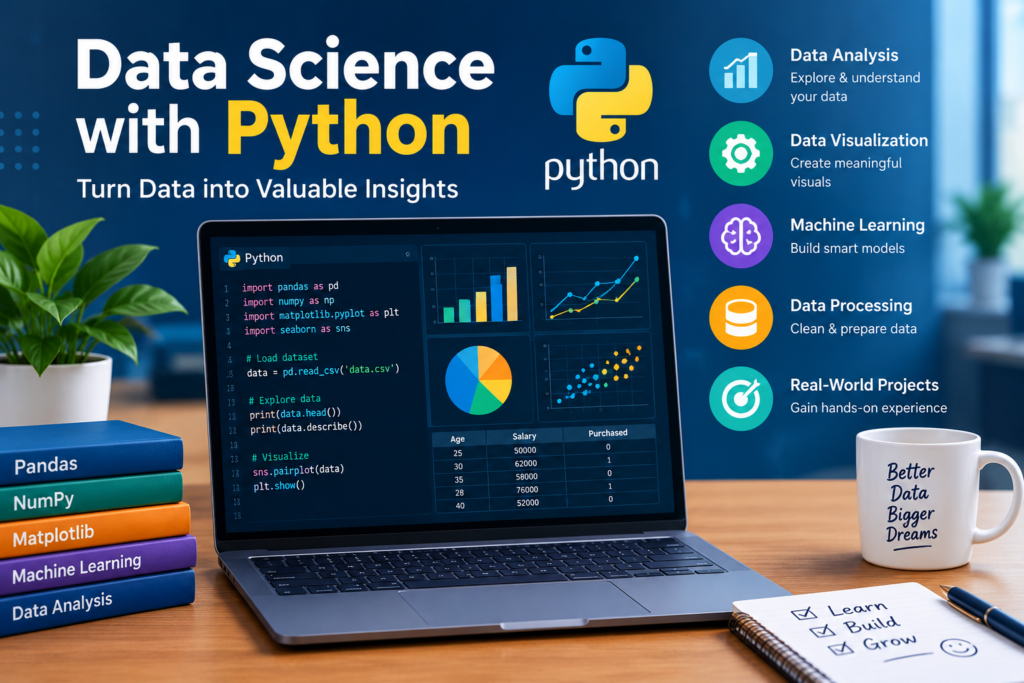
Essential Python Libraries for Data Science
Python offers several libraries that help users handle different stages of data analysis.
- NumPy: Supports numerical operations, mathematical calculations, and array-based data processing.
- Pandas: Helps import, organise, filter, and analyse information stored in tables.
- Matplotlib: Allows users to represent data through graphs, charts, and other visual formats.
- Seaborn: Makes statistical data visualisation easier with clear and informative graphics.
- Scikit-learn: Provides tools for developing machine learning models and evaluating their performance.
By learning these Python libraries, beginners can analyse real-world data more effectively, identify useful patterns, and communicate their results clearly through meaningful insights and visualisations.
How Data Science Is Used in Real-World Industries
Data science has practical applications in many sectors. Healthcare organisations can study medical information to support research and identify patterns in patient records. Financial institutions can examine transactions to detect unusual activity and assess potential risks. Retail businesses can use sales information to manage stock and understand customer demand. In digital marketing, analysing website visits, advertising campaigns, and audience engagement helps marketers identify successful strategies and improve campaign performanceKey Benefits of Learning Data Science with Python
Key Benefits of Learning Data Science with Python
Learning data science develops technical knowledge alongside logical thinking and problem-solving abilities. Students gain experience in handling datasets, interpreting results, and presenting information through visualisations. Python also connects data science with other growing fields, including automation, artificial intelligence, and machine learning. Practising these skills through real-world exercises can help learners understand how data supports business operations and technological development.
Career Opportunities in Data Science
As organisations increasingly rely on data to guide their decisions, several career paths are available to people with relevant skills. Beginners may work towards roles such as data analyst, business intelligence analyst, data scientist, or machine learning engineer. Each position requires a different combination of programming, statistical knowledge, and practical experience. Developing personal projects, learning analytical tools, and building a portfolio can help candidates demonstrate their abilities to potential employers.
How to Begin Learning Data Science with Python
The best starting point for beginners is to understand Python fundamentals, including variables, data types, conditional statements, loops, and functions. After gaining confidence in programming, learners can explore Pandas and NumPy to practise working with datasets. After learning the basics, beginners can explore statistics and create charts to identify patterns and connections within datasets. Practising with simple projects, such as comparing monthly sales or evaluating student results, helps learners gain hands-on experience and improve their data analysis skills.
Conclusion
Data Science with Python offers a practical way to explore information, identify useful patterns, and solve problems across different industries. Its accessible programming language and extensive collection of libraries make it a suitable starting point for aspiring data professionals. By learning the fundamentals, practising with real datasets, and exploring machine learning concepts, beginners can gradually improve their technical abilities. Consistent learning and hands-on project experience can help them prepare for new opportunities in data analytics and other technology-driven careers.


Comments
Post a Comment