How to Become a Software Developer Without Experience in 2026
Software Developer have you ever thought about becoming a software developer but felt unsure because you have no work experience? You are not alone. Many people who work in the software industry today started with little or no technical knowledge. The good news is that you can also begin your journey by learning the basics, practicing regularly, and working on simple projects. In 2026, beginners have access to many online learning resources that make it easier to develop programming skills. With patience and a clear learning plan, you can prepare yourself for your first opportunity in the IT industry.
Understand the Basics of Software Development
Before writing your first program, take some time to understand what software developers actually do. They create and maintain digital products, including websites, mobile applications, and business management systems.
If you are completely new to programming, start with simple concepts rather than trying to learn everything at once. Learn how variables store information, how conditions make decisions, and how loops repeat tasks. Once you understand these ideas, functions and other programming concepts will become easier to follow.
Choose a Programming Language That Suits You
One common mistake beginners make is trying to learn several programming languages at the same time. This can make the learning process confusing and difficult to manage. Instead, choose one language that matches your interests and practise it until you feel comfortable.
Improve Your Skills by Building Small Projects
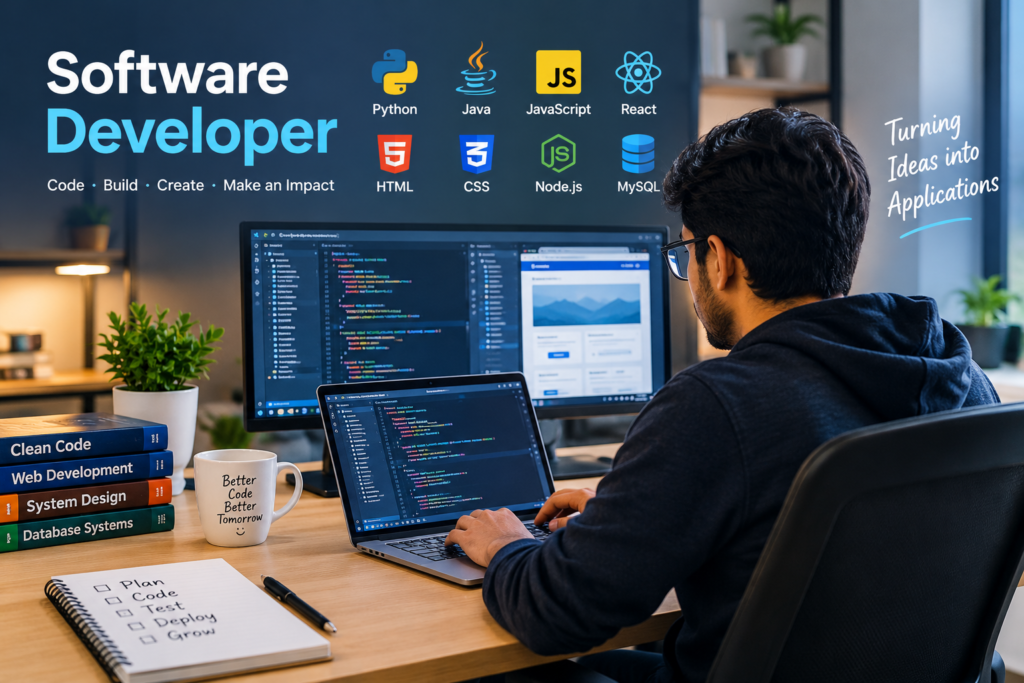
Software Developer reading tutorials can help you understand programming, but writing code yourself is where real learning begins. You may understand a concept while watching a lesson, yet struggle when you try to use it independently. That is why practicing through small projects is important.
Start with something simple, such as a calculator, a to-do list, or a basic personal website. Later, you can try creating a student record system or a small application that stores information in a database. When a problem appears, take time to understand the error and work towards a solution.
Create a Portfolio to Showcase Your Work
Software Developer when you apply for your first software development job, employers may want to see what you can build. A portfolio gives you an opportunity to demonstrate your skills, even if you have not worked for a company before.
Choose a few projects that you have completed yourself and explain what each one does. Mention the programming languages, tools, and technologies you used. You can also describe a challenge you faced during development and how you solved it.
GitHub is a useful platform for storing and sharing your code. If you enjoy web development, you can also create a personal website to display your projects and contact details. Keep your portfolio updated as you learn new skills and complete more work.
Gain Practical Experience Through Internships
Learning independently is valuable, but working with other developers can teach you things that tutorials may not cover.
As an intern, you might help test an application, correct small coding errors, update existing features, or document technical information. These responsibilities introduce you to the way software projects are managed in professional environments.
Learn the Tools Used by Software Developers
Software Developer programming languages are only one part of software development. Developers also use tools to write code, manage changes, test applications, and work with other team members.
For example, Visual Studio Code is a popular code editor, while Git helps developers track changes in their projects. GitHub allows them to store code online and collaborate with others. As your knowledge grows, you can explore databases such as MySQL and learn technologies related to your chosen field.
Prepare Your Resume and Practice for Interviews
Your resume should clearly present your education, technical skills, projects, relevant certifications, and internship experience, if you have any.
Before an interview, revise programming fundamentals and practise basic coding problems. Be ready to explain your projects, including the decisions you made and the challenges you encountered. Employers may also assess your communication, logical thinking, and willingness to learn. Being honest about your current abilities is better than claiming expertise in technologies you have not used.
Continue Learning as Technology Changes
Software developer is a field where learning continues even after you get your first job. New tools, frameworks, and development practices appear regularly, so it helps to remain curious and open to improvement.
Once you have a good understanding of programming, you can explore areas such as web development, mobile applications, cloud computing, software testing, or artificial intelligence. Choose a direction that interests you rather than attempting to master every technology at once.
Conclusion
Becoming a software developer without previous work experience may take time, but it is a realistic goal when you approach it step by step. Begin with programming fundamentals, choose a suitable language, and practise by creating projects. Then, build a portfolio, explore internships, learn essential development tools, and prepare for entry-level interviews.
Remember that your first step does not have to be perfect. You may face errors, struggle with difficult concepts, or need to repeat lessons before they make sense. These experiences are a normal part of learning. Stay patient, keep practising, and focus on improving your skills.


Comments
Post a Comment