How a DevOps Course Improves Software Quality and Development Speed
In today's technology-driven world, businesses need to develop software quickly while maintaining high quality. Customers expect applications to work smoothly, perform reliably, and receive regular updates. To meet these expectations, many companies are adopting DevOps practices.
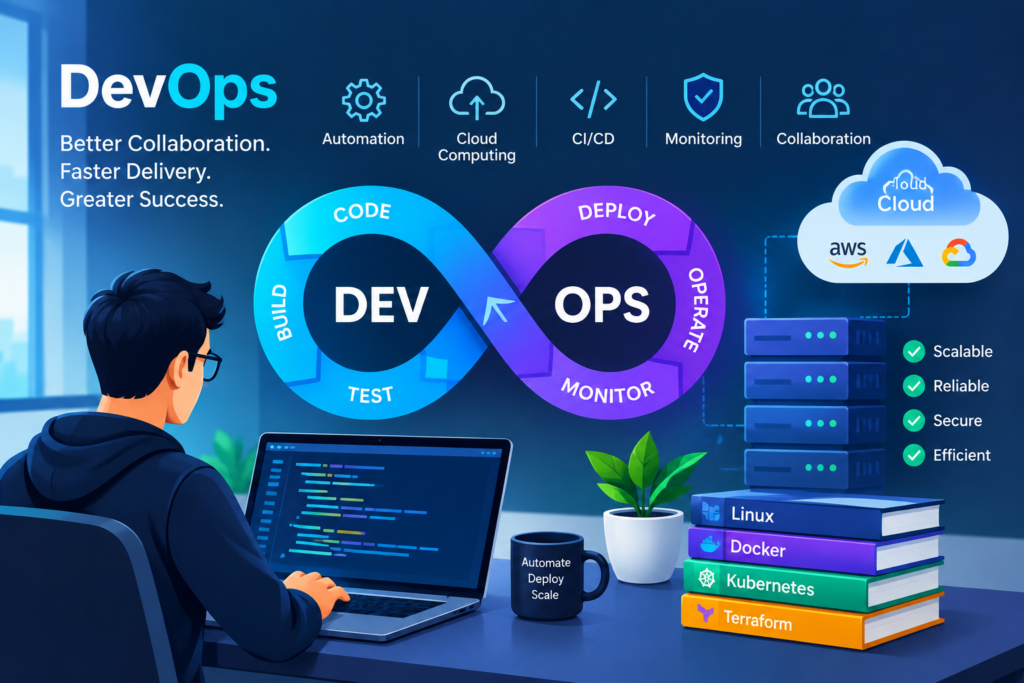
DevOps combines software development and IT operations to improve teamwork, automate repetitive tasks, and simplify software delivery. A DevOps course helps students and professionals learn the tools and techniques needed to develop, test, and deploy software efficiently.
What Is DevOps?
DevOps is a combination of development and operations. It encourages developers, testers, and operations teams to work together throughout the software development lifecycle.
Traditional development methods may involve separate teams for coding, testing, and deployment, which can cause communication problems and delays. DevOps reduces these challenges through collaboration, automation, and continuous improvement.
A DevOps course introduces important concepts such as Continuous Integration (CI), Continuous Delivery (CD), version control, infrastructure automation, and application monitoring.
- Improves Software Quality Through Automated Testing
Automated testing helps developers identify errors before software reaches users. Instead of performing every test manually, teams can use automated tools to check whether new code works correctly.
A DevOps course teaches learners how to integrate testing into development workflows. They can understand unit testing, integration testing, and other quality checks.
For example, when a developer updates a login feature, automated tests can verify that authentication works properly and existing features remain functional. Identifying problems early makes them easier to fix and improves software reliability.
- Speeds Up Development Through Continuous Integration
Continuous Integration involves regularly combining code changes into a shared repository. Automated builds and tests help identify errors and conflicts early.
DevOps courses introduce tools such as Git, Jenkins, and GitHub Actions to help learners understand how code integration and testing can be automated.
This approach reduces the time developers spend resolving complicated integration problems. It also encourages teamwork and helps companies deliver software updates more frequently.
- Reduces Deployment Errors Through Automation
Manual software deployment involves repetitive tasks, including configuring environments, preparing servers, and installing applications. Mistakes during these steps can cause unexpected failures.
DevOps encourages deployment automation to make software releases more consistent. A course may introduce tools such as Docker, Kubernetes, and Ansible, depending on its syllabus.
These tools help teams package applications, manage configurations, and deploy software efficiently. Automation reduces manual work and allows developers to focus more on improving software features.
- Supports Faster Software Releases
Continuous Delivery helps teams automatically build, test, and prepare software for release. Some production deployments may still require manual approval.
Through a DevOps course, learners discover how pipelines move code through building, testing, and validation stages.
Instead of waiting for large releases, companies can deliver smaller updates more frequently. This helps them respond to customer feedback, fix issues, and introduce improvements without unnecessary delays.
- Encourages Better Team Collaboration
Poor communication between development and operations teams can slow down projects. DevOps encourages both teams to share responsibilities, communicate regularly, and work toward common goals.
A DevOps course helps students understand collaborative workflows, version control, and issue tracking. Hands-on projects help learners understand the complete software development process, from writing code and testing it to deploying the final application.
Better collaboration helps teams solve problems quickly, reduce misunderstandings, and complete projects more efficiently.
- Improves Application Reliability Through Monitoring
Software must continue performing well after deployment. Monitoring helps teams track application performance, errors, and system resources.
A DevOps course may introduce tools such as Prometheus, Grafana, and the Elastic Stack. These tools help learners understand performance metrics, analyse logs, and identify potential problems.
For example, monitoring can reveal that an application becomes slow when user traffic increases. Teams can investigate the cause and improve performance before more users experience difficulties.
- Simplifies Infrastructure Management
Infrastructure includes the servers, networks, and resources required to run applications. Managing these resources manually can become challenging as projects grow.
Infrastructure as Code (IaC) allows teams to manage infrastructure through configuration files. A DevOps course may teach tools such as Terraform and Ansible.
These tools help teams create consistent environments, reduce configuration errors, and simplify infrastructure management. Consistent environments also reduce problems when moving software from testing to production.
- Develops Practical Technical Skills
Practical experience is essential for understanding DevOps concepts. A good course combines theoretical lessons with hands-on projects.
Students may learn Git, automated pipelines, Docker, cloud platforms, infrastructure management, and application monitoring. These activities help learners understand how different tools work together in real projects.
The skills gained can support career opportunities such as DevOps engineer, cloud engineer, and build and release engineer, depending on the learner's experience and additional qualifications.
Security is an important part of software quality. Finding vulnerabilities early can help prevent problems after an application is released.
DevSecOps integrates security practices into the development process. These practices may include vulnerability scanning, dependency checks, and secure configuration management.
A DevOps course that covers security helps learners understand how to identify risks and include security checks in automated pipelines. This supports safer software development and more reliable releases.
Conclusion
A DevOps course helps learners understand how automation, continuous integration, testing, monitoring, and collaboration improve software quality and development speed. It teaches practical methods for reducing errors, simplifying deployment, and delivering updates more efficiently.
DevOps is not just about releasing software faster. It also focuses on reliability, security, teamwork, and continuous improvement. By gaining practical experience through a structured course, students and IT professionals can develop valuable skills for modern software development and build a strong foundation for their technology careers.


Comments
Post a Comment