Artificial Intelligence: Transforming the Future of Technology and Business
Artificial Intelligence (AI) is rapidly becoming a driving force behind innovation, automation, and digital transformation across industries worldwide. From virtual assistants and smart recommendations to advanced healthcare systems and business automation, AI is changing how people live, work, and interact with technology. It enables computers and machines to perform tasks that normally require human intelligence, including learning, reasoning, problem-solving, and decision-making ,require human intelligence, including learning, reasoning, problem-solving, and decision-making.
As technology continues to evolve, Artificial Intelligence is becoming an essential part of industries worldwide. Businesses of every size are adopting AI-powered solutions to improve efficiency, reduce operational costs, and deliver better customer experiences. Its growing impact makes AI one of the most valuable innovations shaping the future.
What Is Artificial Intelligence?
Artificial Intelligence refers to the ability of computer systems to imitate human intelligence by analyzing data, recognizing patterns, and making informed decisions. Unlike traditional software that depends on predefined instructions, Artificial Intelligence continuously learns from data, adapts to new information, and improves its performance through ongoing experience
Machine learning, natural language processing, computer vision, and robotics are among the key technologies that power modern AI applications. Together, these technologies allow machines to perform increasingly complex tasks with speed and accuracy.
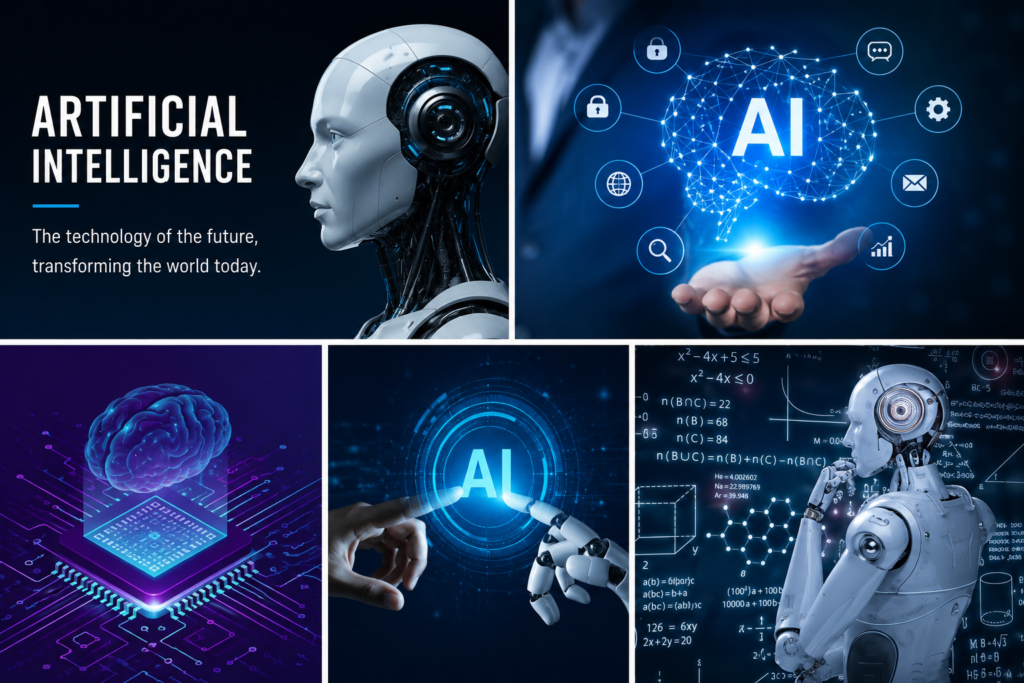
How Artificial Intelligence Works
AI systems rely on large volumes of data and advanced algorithms to identify patterns and generate predictions. The process begins with collecting relevant information, followed by training models to recognize relationships within that data. Once trained, these models can make decisions, solve problems, or automate repetitive tasks with minimal human intervention.
As more data becomes available, AI systems continue learning and refining their performance, making them more accurate and efficient over time.
Benefits of Artificial Intelligence
Artificial Intelligence provides numerous advantages for businesses, organizations, and individuals.
Increased Productivity
AI automates repetitive and time-consuming tasks, allowing employees to focus on creative thinking, strategic planning, and higher-value responsibilities. This improves overall productivity while reducing manual effort.
Better Decision-Making
By analyzing large datasets in seconds, AI helps businesses make informed decisions based on accurate insights. Predictive analytics enables organizations to identify trends, forecast demand, and optimize operations.
Enhanced Customer Experience
Artificial Intelligence (AI) is transforming industries by enabling intelligent automation, enhancing decision-making, and creating new opportunities for innovation and business growth. AI-powered systems enhance customer support by providing instant assistance, resolving common inquiries, and delivering personalized recommendations 24 hours a day, seven days a week.
Improved Accuracy
AI minimizes human errors in data processing, financial analysis, medical diagnostics, and manufacturing. Higher accuracy leads to better outcomes, improved quality, and increased customer satisfaction.
Cost Savings
Automation reduces labor-intensive processes and streamlines business operations. As a result, organizations can lower operational costs while increasing efficiency and profitability.
Applications of Artificial Intelligence
Artificial Intelligence is transforming nearly every industry.
Healthcare
AI assists healthcare professionals by analyzing medical images, supporting disease diagnosis, predicting patient outcomes, and accelerating drug discovery. It also helps hospitals improve patient care through efficient scheduling and resource management.
Finance
Banks and financial institutions use AI to detect fraudulent activities, assess financial risks, automate customer service, and deliver personalized banking experiences.
Education
AI-powered learning platforms adapt educational content based on individual student performance. Virtual tutors and intelligent assessment systems create more engaging and personalized learning experiences.
Retail and E-commerce
Online retailers use AI to recommend products based on customer preferences and browsing history. Inventory management, demand forecasting, and personalized marketing campaigns also benefit from AI technology.
Manufacturing
Manufacturers implement AI to monitor equipment performance, predict maintenance needs, improve quality control, and optimize production processes, reducing downtime and increasing efficiency.
Artificial Intelligence in Digital Marketing
Digital marketing has been significantly enhanced through Artificial Intelligence. AI helps marketers understand customer behavior, segment audiences, personalize content, and optimize advertising campaigns. Email marketing, search engine optimization, social media management, and paid advertising all benefit from AI-driven insights.
Marketing teams can analyze campaign performance in real time, identify opportunities for improvement, and create more effective strategies that deliver higher engagement and better return on investment.
Challenges of Artificial Intelligence
Although AI offers numerous benefits, it also presents important challenges. Data privacy, cybersecurity, algorithm bias, and ethical concerns require careful attention. Businesses should adopt AI responsibly by ensuring data security, maintaining transparency, meeting regulatory standards, and protecting sensitive customer information.
Additionally, organizations should balance automation with human expertise to maintain trust, accountability, and responsible decision-making.
The Future of Artificial Intelligence
The future of Artificial Intelligence looks promising as innovations continue to expand across industries. AI is expected to play a greater role in autonomous vehicles, smart cities, advanced robotics, personalized healthcare, financial services, and scientific research.
As computing power increases and AI models become more sophisticated, businesses will discover new opportunities to improve efficiency, solve complex problems, and create innovative products and services. Companies that adopt Artificial Intelligence responsibly can drive innovation, improve operational efficiency, and maintain a competitive edge in today's rapidly evolving digital economy.
Conclusion
Artificial Intelligence is reshaping the way businesses operate and how people interact with technology. Its ability to automate processes, analyze data, improve decision-making, and deliver personalized experiences has made it a valuable asset across multiple industries. While ethical considerations, data privacy, and cybersecurity require ongoing attention, Artificial Intelligence continues to deliver substantial value by improving efficiency, fostering innovation, and supporting informed decision-making.
Organizations that adopt Artificial Intelligence today are laying the groundwork for sustainable growth, enhanced efficiency, and continuous innovation in the digital era. As AI continues to evolve, it will remain one of the key technologies driving digital transformation and long-term business success.


Comments
Post a Comment