Full Stack Java Developer – Skills for Modern IT Careers
Introduction
The IT industry is growing faster than ever, and companies are constantly searching for professionals who can manage complete web application development. Full Stack Java Development has become one of the most in-demand career options because it combines both front-end and back-end technologies. A full stack developer has the ability to create attractive user interfaces, handle server-side operations, manage databases, and ensure smooth application performance. Java continues to be one of the most trusted programming languages in the software industry because of its stability, security, and flexibility.
Learning Full Stack Java helps students and professionals gain technical knowledge that is useful in real-world software projects. It provides a strong foundation for building websites, web applications, and enterprise-level software solutions.
Understanding Full Stack Java Development
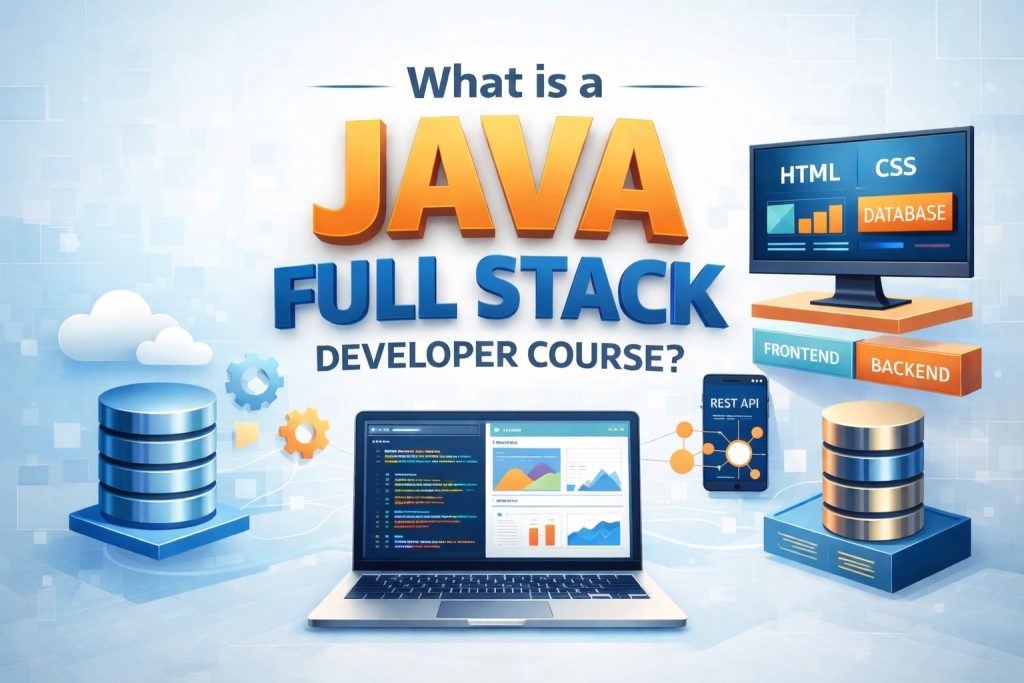
Full Stack Java Development covers every layer of web application creation. The front end focuses on designing interactive and responsive web pages using technologies such as HTML, CSS, JavaScript, Bootstrap, React, or Angular. These technologies help developers create visually appealing websites that provide a better user experience.
The back end is responsible for handling application logic, databases, and server communication. Java frameworks like Spring Boot, Hibernate, and JSP are commonly used to build secure and scalable applications. Developers also work with databases such as MySQL or MongoDB to store and manage data efficiently.
A full stack Java developer understands how both the client side and server side work together. This complete knowledge allows developers to build applications from start to finish without depending heavily on multiple teams.
Importance of Java in Web Development
Java has remained one of the most popular programming languages for decades. Many large companies and enterprise organizations prefer Java because it is secure, reliable, and platform-independent. Applications developed in Java can run on different operating systems without major modifications, making it a practical choice for businesses.
Java is also known for its strong community support and extensive libraries. Developers can easily access tools, frameworks, and resources that simplify the development process. Because of its versatility, Java is widely used in banking applications, e-commerce platforms, healthcare systems, and enterprise software.
Skills Learned in a Full Stack Java Course
A Full Stack Java course helps learners develop both technical and practical skills required in the software industry. Students usually learn:
- HTML, CSS, and JavaScript for front-end design
- Bootstrap or React for responsive web interfaces
- Core Java concepts and object-oriented programming
- Spring Boot and Hibernate frameworks
- Database management using MySQL
- REST API development
- Version control tools like Git and GitHub
- Deployment and testing techniques
Practical projects are an important part of the learning process because they help students apply their knowledge to real-world applications.
Career Opportunities in Full Stack Java
The demand for skilled full stack Java developers continues to grow across various industries. Businesses need professionals who can manage complete application development and contribute to multiple stages of a project. After completing a Full Stack Java course, candidates can apply for roles such as:
- Full Stack Developer
- Java Developer
- Software Engineer
- Backend Developer
- Web Application Developer
- API Developer
Many startups and multinational companies prefer hiring full stack developers because they can work on both front-end and back-end technologies, improving overall productivity.
Benefits of Learning Full Stack Java
One of the biggest advantages of learning Full Stack Java is career flexibility. Developers can work in different industries, including finance, healthcare, education, retail, and technology services. The skill set also provides opportunities for freelancing and remote work.
Another major benefit is the high demand for Java developers in the job market. Since many organizations still rely on Java-based applications, professionals with strong Java skills often receive competitive salary packages and long-term career growth opportunities.
Conclusion
Full Stack Java Development is an excellent career choice for anyone interested in software and web development. It combines creative front-end design with powerful back-end programming, making developers capable of building complete web applications. With proper training, practical experience, and consistent learning, students can become industry-ready professionals. As digital transformation continues to grow, Full Stack Java developers will remain highly valuable in the technology sector for years to come.


Comments
Post a Comment